

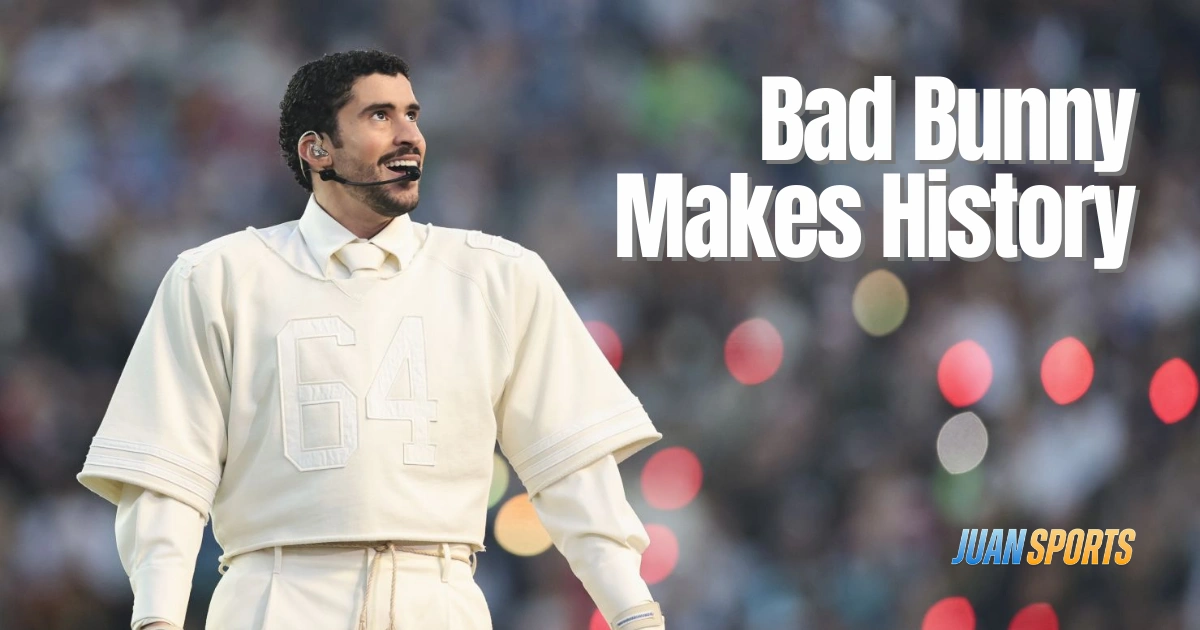
On February 8, 2026, the world witnessed a cultural earthquake as Bad Bunny headlined the Super Bowl LX Halftime Show at Levi’s Stadium. Delivering a performance that was both a political statement and a global dance celebration, Bad Bunny shattered records, redefined Latin representation, and dominated the world’s most-watched stage almost entirely in Spanish, according to Juan Sports. While the New England Patriots secured the Lombardi Trophy on the field, the night belonged to the Latin trap superstar.
The Set: A Puerto Rican Village in Silicon Valley
The production design for Super Bowl LX was unlike anything the NFL had ever sanctioned. Eschewing traditional LED floors, the team built a sprawling, colorful Puerto Rican Village (Pueblo) on the 50-yard line. Miniature plazas, street murals, festival decorations, and performers portraying everyday Puerto Rican life immersed the audience in the island’s vibrant culture.
The show opened with the pulsing beats of El Apagón, a track addressing Puerto Rico’s power outages and gentrification. As stadium lights flickered in a choreographed blackout, it was clear that Bad Bunny wasn’t just performing—he was representing a cultural identity on a global stage.
Star-Studded Guest List
While commanding attention on his own, Bad Bunny incorporated the “La Familia” theme, blending Latin pop legends and contemporary reggaeton stars.
- Lady Gaga: Joined Bad Bunny for a bilingual rendition of Die With a Smile, combining her powerhouse vocals with Latin trap rhythms.
- Ricky Martin: Performed a mashup of his classics with Lo Que Le Pasó a Hawai, symbolizing a generational passing of the torch.
- Cameos: Cardi B, Karol G, Pedro Pascal, and Jessica Alba participated in a staged Puerto Rican wedding mid-performance, reinforcing Bad Bunny creative vision.
Each appearance highlighted the Puerto Rican artist’s ability to unite diverse talents while remaining rooted in cultural identity.
Breaking the Language Barrier
Super Bowl halftime shows have historically been dominated by English-language pop. Even Shakira and Jennifer Lopez performed heavily in English in 2020. Bad Bunny, however, refused to compromise. Hits like Tití Me Preguntó and Moscow Mule were performed entirely in Spanish, proving that music transcends language.
The inclusion of Puerto Rican Sign Language (PRSL) marked a historic first for the NFL, allowing the deaf community to experience lyrics and choreography fully. This expanded the Super Bowl’s inclusivity while highlighting the intersection of music, language, and identity.
Fans noted that Bad Bunny commitment to performing in Spanish made a bold statement about cultural pride on a global stage.
Viewership and Global Cultural Impact
According to Juan Sports, the halftime performance averaged 128.2 million viewers in the U.S. alone. International streaming records were broken in Mexico, Spain, and the Philippines, where Bad Bunny influence on dance trends and youth culture continues to grow.
Social media exploded with fan reactions, memes, and TikTok challenges replicating the superstar’s choreography. Filipino audiences, particularly in Manila and Cebu, resonated with the colorful, festive storytelling, drawing parallels between Puerto Rican and Filipino celebrations—from street festivals to family-centered music traditions.
The show also sparked discussions about cultural representation, language, and the role of Latin artists in mainstream U.S. media. Analysts noted that Bad Bunny ability to blend social commentary with entertainment elevated the performance from a typical halftime show to a cultural milestone.
Controversy and the FCC Investigation
As expected with a groundbreaking performance, some controversy arose. Republican lawmakers requested an FCC investigation into lyrics and choreography, citing “indecency” during reggaeton segments.
The FCC’s preliminary report found no violations. The controversy only fueled conversations, reinforcing Bad Bunny cultural impact. In counter-programming, Turning Point USA hosted a rival “All-American Halftime Show” featuring Kid Rock, highlighting generational and cultural divides. Despite the pushback, mainstream media celebrated the creative risk-taking as a watershed moment in music and sports entertainment.
Technical Brilliance: The Sound of the Caribbean
From a technical standpoint, the halftime show was a marvel of engineering and artistry. Sound engineers balanced heavy trap bass with live brass sections and traditional jíbaro instruments, creating an immersive Caribbean soundscape.
Musical Highlights:
- Seamless Transitions: Moving from trap-heavy Booker T (with WWE legend cameo) to tropical vibes in Después de la Playa showcased Bad Bunny versatility.
- Dynamic Staging: A 200-person cast navigated multiple levels of the set, bringing the Puerto Rican village to life.
- Grand Finale: Fireworks lit up Levi’s Stadium as the cast performed Dakiti, turning the field into a beach party—a moment unforgettable for fans worldwide.
Fashion and Visual Storytelling
Wardrobe choices were statements in themselves. From neon tropical suits to traditional Puerto Rican garb, each costume told a story of heritage and rebellion. Designers collaborated to highlight Puerto Rican pride while supporting high-energy choreography.
Lighting, synchronized crowd interactions, and layered staging elevated the performance from a musical act to a full cultural spectacle, reinforcing the superstar’s global status. Critics noted that every detail mirrored meticulous attention to musical and visual storytelling, hallmarks of Bad Bunny signature style.
Legacy: The “Benito” Era of Sports Entertainment
The NFL has long struggled to capture Gen Z and international audiences. By giving the halftime stage to Bad Bunny the league successfully pivoted toward a younger, globally diverse fanbase.
For Filipino audiences following via Juan Sports, the Super Bowl is usually seen as strictly “American,” but the 2026 show resonated deeply. The colorful spectacle, infectious rhythms, and celebration of cultural pride highlighted the global reach of Latin music in sports entertainment.
Critics hailed the performance as a blueprint for future halftime shows, proving that cultural authenticity, language integrity, and musical excellence can coexist on the biggest stage in sports.
What’s Next for the NFL?
Rumors for the 2027 halftime show are already circulating. With the bar set so high by Bad Bunny Caribbean takeover, the NFL reportedly eyes international superstars like BTS or Taylor Swift to maintain momentum.
For now, the conversation centers on the boy from Vega Baja who conquered the world stage without altering a single word of his vocabulary. Bad Bunny didn’t just perform; he redefined the sound, look, and cultural meaning of the Super Bowl halftime show in the 21st century.
Browse other News.

Leave a Reply