

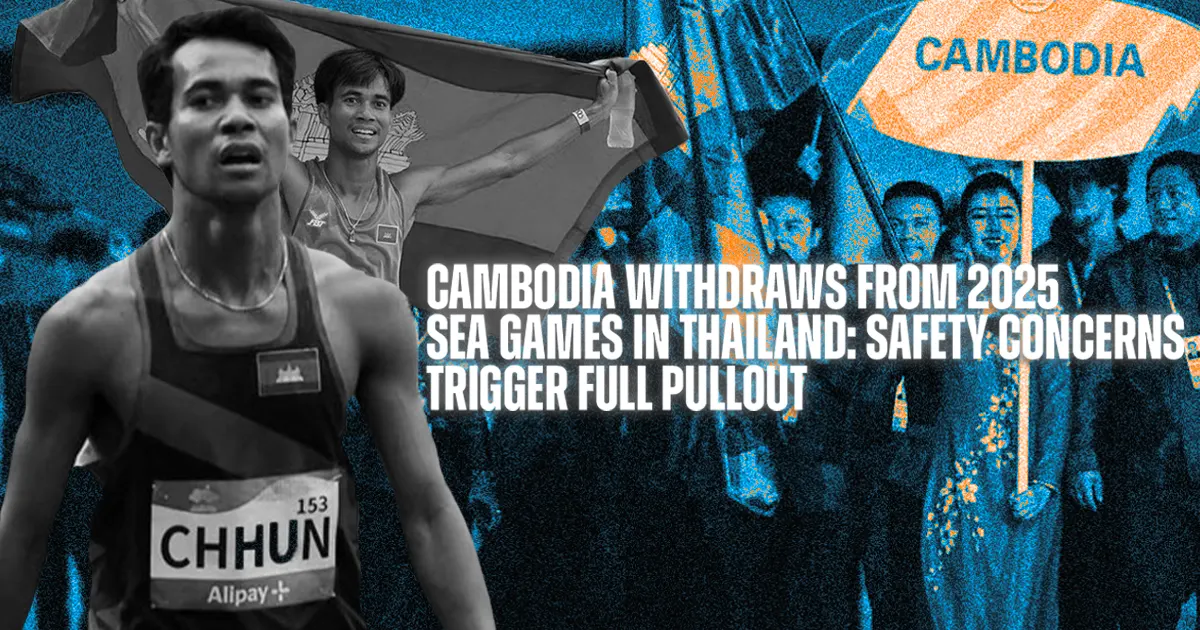
Cambodia SEA Games 2025 took a dramatic turn as Cambodia withdrew its entire delegation from the 33rd Southeast Asian (SEA) Games held in Thailand on December 10, 2025. The National Olympic Committee of Cambodia (NOCC) cited urgent safety concerns following renewed clashes along the Cambodia–Thailand border. The unexpected decision came just a day after Cambodian athletes took part in the SEA Games’ opening ceremony in Bangkok, marking one of the most significant disruptions in recent SEA Games history, according to Juan Sports.
Families of athletes also expressed deep concern for their loved ones’ safety, urging the NOCC to request a complete withdrawal from all events. The move sent shockwaves through the regional sports community and highlighted how fragile the relationship between sport and geopolitics can be. The Cambodia SEA Games 2025 withdrawal has since raised questions about its impact on the Games and the long-term implications for Cambodia’s sports development.
Cambodia’s SEA Games Legacy
Cambodia withdraws from the SEA Games 2025 after decades of consistent participation and development in regional sports. From returning to full participation after historical interruptions to hosting the 2023 edition of the SEA Games, Cambodia has invested heavily in nurturing athletes and strengthening sports infrastructure. Hosting the 2023 SEA Games was a milestone that boosted national pride, showcasing emerging talents across athletics, swimming, martial arts, and team sports.
The Cambodia SEA Games 2025 would have been an opportunity to further solidify Cambodia’s presence in the Southeast Asian sporting community. However, the Cambodia SEA Games 2025 withdrawal represents a significant setback for the country’s sporting ambitions. For many athletes, missing out on the 2025 SEA Games means delaying their chance to compete at a higher level, gain international exposure, and prepare for other continental or global competitions.
Partial Withdrawal from Eight Sports
Even before the SEA Games 2025 officially began, Cambodia’s withdrawal was signaled in stages. On November 27, 2025, the NOCC announced it would withdraw from eight sports: football, sepak takraw, petanque, wrestling, judo, karate, pencak silat, and wushu. The decision was made as a safety measure due to “significant security concerns,” and it reduced Cambodia’s delegation from 333 members to approximately 150. This partial Cambodia SEA Games 2025 withdrawal was intended to ensure that the remaining athletes could compete safely while managing potential risks amid the escalating regional tensions.
Secretary-General Vath Chamroeun emphasized that this decision was not made lightly. The partial Cambodia SEA Games 2025 pullout was intended to allow some athletes to continue competing safely, while others were withdrawn to minimize potential risks in the volatile situation.
Escalation Leads to Full Withdrawal
Tensions escalated throughout early December as clashes between Cambodian and Thai troops broke out in disputed border regions, increasing the security risks for the Cambodia SEA Games 2025 delegation. Despite these growing risks, Cambodia’s reduced team still attended the SEA Games 2025 opening ceremony on December 9, 2025.
However, less than 24 hours later, the NOCC issued a formal letter to the SEA Games Federation requesting the full withdrawal of all Cambodian athletes and officials. Citing serious safety concerns and urgent family requests, the NOCC confirmed that Cambodia was withdrawing entirely from the SEA Games 2025.
Chamroeun expressed his gratitude to the Thai organizers for their hospitality and noted that the decision reflected the delegation’s priority for safety over competition. This decision, while painful, was seen as a responsible response to the escalating security situation.
Implications for the 2025 SEA Games
Disruption of Schedules
The announcement that Cambodia would withdraw immediately impacted event schedules across multiple sports. Groupings in football, martial arts competitions, swimming heats, and other disciplines had to be adjusted. Organizers revised brackets and rescheduled matches to accommodate the sudden absence of Cambodian athletes from the SEA Games 2025.
Competitive Impact
The Cambodia SEA Games 2025 withdrawal diminished the number of competitors in key events, particularly in sports where Cambodia traditionally fields strong athletes. This will likely affect medal outcomes and reduce the diversity of competition in several disciplines, including karate, wushu, and sepak takraw.
Regional Tensions in Sports
The Cambodia withdrawal highlights how international sporting events can be vulnerable to geopolitical conflicts. The SEA Games 2025 are meant to foster unity and friendly rivalry in Southeast Asia, but Cambodia’s exit underscores how national tensions can overshadow the spirit of the Games.
Athlete Welfare
The concerns of athletes’ families and the NOCC’s prioritization of safety emphasize that the Cambodia SEA Games 2025 withdrawal was ultimately about athlete welfare. While the situation was disappointing for many competitors, the NOCC’s decision is a stark reminder that safety must come before competition, particularly in volatile political climates.
Reactions from Officials and Athletes
The NOCC’s statement framed Cambodia’s decision to withdraw as a safety issue. SEA Games organizers confirmed Cambodia’s exit, with Akarin Hiranprueck stating, “It is confirmed that Cambodia withdrew.” Thai authorities expressed readiness to adjust event schedules and provide additional security but acknowledged that the Cambodian delegation chose to leave due to the growing safety concerns.
Athletes and observers expressed empathy online. On social media, one regional competitor wrote:
“I hope they are safe. It’s heartbreaking to see months of training disrupted by forces outside their control.”
This reaction shows how the Cambodia withdrawal affects not just Cambodia but the broader SEA Games 2025 community, with both athletes and fans showing understanding and support.
Cambodia-Thailand Border Tensions
At the heart of this crisis lies the long-standing territorial dispute between Cambodia and Thailand. The contested border areas have been a source of ongoing tensions, with recent clashes marking the breakdown of a ceasefire agreement. This situation heightened fears for the Cambodia SEA Games 2025 delegation, who were already in Thailand for the event.
While the NOCC framed the Cambodia SEA Games 2025 withdrawal as a precautionary measure, the geopolitical backdrop cannot be ignored. This incident highlights how regional conflicts can disrupt international sporting events, even those intended to promote unity.
Long-Term Implications for Cambodia
Missing the 2025 SEA Games will have long-term effects on Cambodia’s sports programs:
- Athlete Development: Emerging athletes lose the opportunity to compete on a major regional stage, delaying their exposure and development.
- National Morale: Cambodia’s absence will reduce its visibility and pride in the international sports arena, potentially affecting national morale.
- Future Participation: The NOCC may adopt stricter protocols or be more cautious about participating in events held in regions with potential geopolitical risks. The Cambodia SEA Games 2025 withdrawal could also lead to greater scrutiny of future international events in similar situations.
Broader Effects on the SEA Games
The Cambodia withdrawal also underscores the need for SEA Games organizers to plan for unforeseen disruptions. With Cambodia out of the competition, organizers may need to implement:
- Enhanced safety protocols for delegations in politically sensitive regions.
- Contingency plans to handle last-minute withdrawals without major disruption.
- Clear communication strategies to reassure athletes, officials, and families about security measures.
This event illustrates how geopolitical factors, like the Cambodia SEA Games 2025 withdrawal, can have a profound impact on international competitions.
Expert Perspective
Sports analysts believe Cambodia’s withdrawal was a responsible decision, even though it was disappointing for many. Dr. Sokha Meas, a Southeast Asian sports historian, commented:
“Athletes’ safety must always come first. While the Cambodia SEA Games 2025 withdrawal affects competition, the NOCC’s decision reflects a clear understanding that geopolitical tensions must be considered when organizing sports events.”
Experts also believe that the Cambodia SEA Games 2025 withdrawal may prompt future nations to reconsider their participation in events held in politically sensitive regions.
Public Reaction
The public reaction to the Cambodia SEA Games 2025 withdrawal has been mixed, with many expressing sympathy for the athletes and their families. Fans and social media users have acknowledged that the decision was necessary for safety. Others lamented the disruption, noting that Cambodian athletes had trained for months to represent their country.
The reaction highlights how deeply the Cambodia withdrawal has impacted the wider SEA Games community, not only in terms of competition but also in the personal lives of the athletes.
The Future of Cambodia in Regional Sports
While the Cambodia SEA Games 2025 withdrawal is undoubtedly a setback, Cambodia’s commitment to regional sports remains strong. The country’s success in hosting
Browse other News.

Leave a Reply