

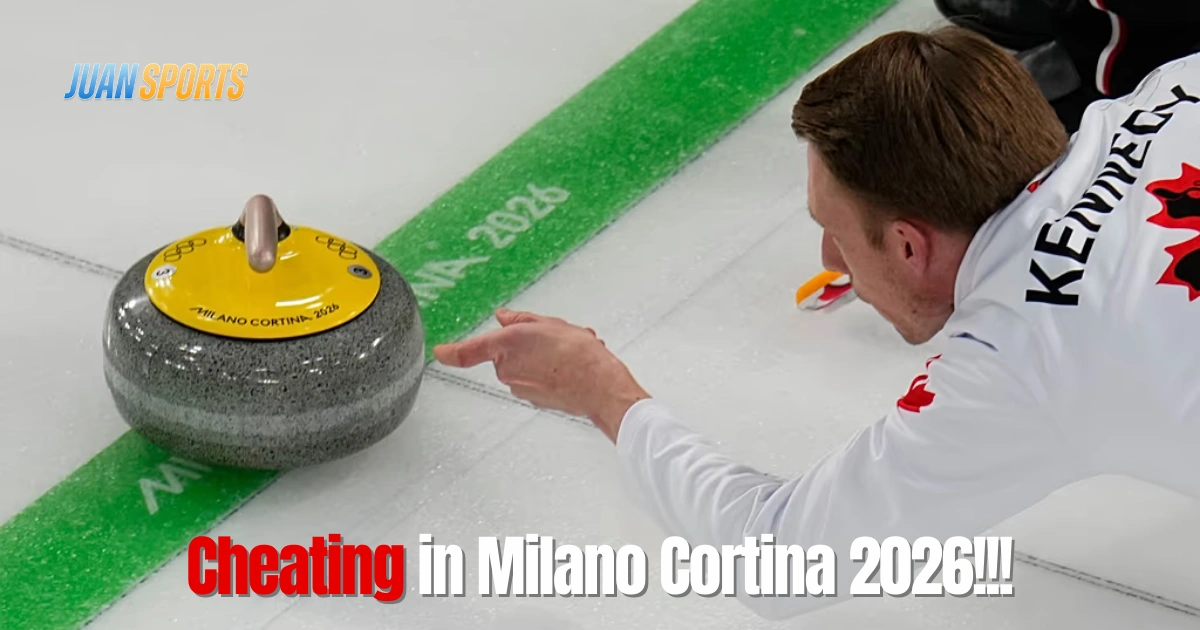
As the Milano Cortina 2026 Winter Olympics reach their midpoint, discussions of cheating in Milano Cortina 2026 have dominated the headlines. What started as a celebration of athletic excellence has quickly turned into a global conversation about integrity, fairness, and accountability. From allegations of double-touching in curling to bizarre doping rumors and administrative corruption, these Games are putting the very foundations of the Olympic spirit to the test.
The “Double-Touching” Crisis in Curling
One of the most high-profile instances of cheating in Milano Cortina 2026 has emerged in the curling competition, where a traditionally self-regulated sport is facing a crisis of trust. Curling has long been known for its emphasis on sportsmanship, with players often calling their own fouls. However, the recent “double-touching” scandal has sparked widespread debate.
What is Double-Touching?
“Double-touching” is a move where a player makes contact with the curling stone after releasing it but before it crosses the “hog line”—the line that marks where the stone must travel past before it is considered in play. This allows the player to subtly alter the stone’s trajectory, a major violation of the sport’s long-standing rules.
The Canadian Controversy
The controversy began when Swedish curler Oskar Eriksson accused Canadian skip Marc Kennedy of double-touching during an 8–6 win. The tension on the ice led to a heated exchange, with Kennedy being given a warning for inappropriate language. This incident quickly escalated into a larger debate about cheating in Milano Cortina 2026, with some even questioning whether the current officiating system was enough to maintain fairness.
Expanding the Debate
The controversy did not end with Canada. In the women’s curling competition, Canadian star Rachel Homan also faced allegations of double-touching during a match against Switzerland. Similar accusations were levied against British curler Bobby Lammie in his match against Germany. This growing number of incidents has fueled ongoing discussions about the prevalence of cheating in Milano Cortina 2026, particularly within the curling community.
Calls for Reform
Some curling competitors, including Tara Peterson from the USA, have advocated for the immediate introduction of video replay technology to help detect violations like double-touching. However, the World Curling Federation has resisted these calls, arguing that it would disrupt the spirit of the game and slow down play. This ongoing debate over technology versus tradition has made the issue of cheating in Milano Cortina 2026 a focal point of curling at the Winter Olympics.
“Penisgate” and the Aerodynamics Scandal
While curling has been at the center of one controversy, another, more bizarre scandal has rocked the Winter Games. A rumor that male ski jumpers were injecting hyaluronic acid into their genitals to increase lift and improve performance spread like wildfire. This claim, dubbed “Penisgate,” was originally published by the German tabloid Bild and quickly gained traction, leading to widespread media coverage of cheating in Milano Cortina 2026.
The Origins of “Penisgate”
The theory behind the “Penisgate” rumor was that the procedure could increase the surface area of the ski jumper’s jumpsuit, potentially providing a greater aerodynamic advantage. While the World Anti-Doping Agency (WADA) and the International Ski Federation (FIS) dismissed the claims as baseless, the story persisted, causing many to question whether such absurd rumors could damage the credibility of the Games. Despite no official evidence or confirmed cases, the persistent nature of the rumor reflected the ease with which cheating in Milano Cortina 2026 rumors can spread.
Doping and Discipline: The Reality of Cheating
While some controversies are based on unfounded rumors, others are rooted in real cases of doping and unethical behavior. As with every Olympic Games, the fight against performance-enhancing drugs remains a crucial component of maintaining fairness and integrity.
The Nutella Defense
One of the more unusual doping scandals occurred when Italian biathlete Rebecca Passler tested positive for the banned substance letrozole in early 2026. Passler appealed the results, successfully arguing that the trace amounts came from a jar of contaminated Nutella. The Italian Anti-Doping Organization (NADO Italia) accepted her defense and reinstated her, allowing her to participate in the women’s relay on February 18. This case sparked significant debate about the fine line between accidental contamination and intentional doping, further complicating the conversation around cheating in Milano Cortina 2026.
Increased Oversight from WADA
In response to growing concerns about cheating in Milano Cortina 2026, WADA has ramped up its monitoring efforts. A new “Target Testing” program was implemented, allowing more frequent testing of athletes with the potential for using performance-enhancing drugs. While the program aims to prevent further violations, it also signals the increasing scrutiny placed on athletes, emphasizing that the fight against doping is far from over.
Administrative Cheating: Corruption in the Olympic Foundation
Beyond the athletes, cheating in Milano Cortina 2026 has also been linked to issues of administrative corruption. Investigations into the Olympic Foundation have revealed multiple scandals involving the manipulation of bids and sponsorship agreements.
Corruption Raids
Italian financial police (Guardia di Finanza) raided the Milano Cortina 2026 Foundation’s headquarters in early 2026, launching a full-scale investigation into allegations of bid-rigging and corruption. Reports suggested that key figures within the foundation may have been involved in illicit activities that undermined the integrity of the Games. This development has furthered the narrative of cheating in Milano Cortina 2026, as corruption within the governing bodies is a serious breach of the Olympic spirit.
Mafia Ties
Further investigations revealed that at least 74 individuals connected to the construction of the Olympic Village had links to the Italian mafia. This corruption scheme included bribes and rigged contracts that compromised the fairness of the bidding process. As these stories continue to unfold, it has become clear that cheating in Milano Cortina 2026 extends beyond the athletes and into the very structure of the Games themselves.
Personal Scandals: Cheating Outside the Arena
Not all instances of cheating in Milano Cortina 2026 have been tied to athletic performance. Norwegian biathlete Sturla Holm Lægreid found himself embroiled in a personal scandal when he publicly admitted to cheating on his girlfriend during a live, televised interview. The confession, made during a bronze-medal victory, quickly went viral, sparking backlash from his ex-girlfriend and the public.
This incident added a new layer to the discussion of cheating in Milano Cortina 2026, as it raised questions about personal integrity and the role of athletes as public figures. Lægreid’s actions have contributed to the ongoing debate about ethical conduct, both on and off the field.
The IOC’s Response: What’s Next for the Games?
The International Olympic Committee (IOC) is facing unprecedented challenges in dealing with the increasing allegations of cheating in Milano Cortina 2026. With incidents spanning from doping to corruption and personal behavior issues, the IOC must find a balance between upholding the Olympic spirit and ensuring fair competition for all athletes.
The question now remains: how can the IOC address cheating in Milano Cortina 2026 effectively? Increased transparency, stricter enforcement of rules, and the potential introduction of new technologies, such as video replay for curling, may be part of the solution. However, the Olympic Games’ integrity will ultimately rely on the athletes, officials, and fans who hold the Games to the highest standards.
Conclusion
The Milano Cortina 2026 Winter Olympics are marked by a wave of controversies that have brought cheating in Milano Cortina 2026 to the forefront of global discussions. From curling scandals to doping rumors and administrative corruption, these Games have tested the integrity of the Olympic movement in ways not seen before.
As the Games continue, it is crucial for the IOC and all involved parties to address these issues head-on, restoring trust and ensuring that future Olympic events remain fair, transparent, and true to the ideals of the Games. Whether in the snow or the boardrooms, cheating in Milano Cortina 2026 is a challenge that will need to be overcome if the Olympic spirit is to survive.
For continued updates and in-depth coverage of the Milano Cortina 2026 Winter Olympics, stay tuned to Juan Sports—where we bring you the latest insights and analysis on the Games.
Browse other News.

Leave a Reply