

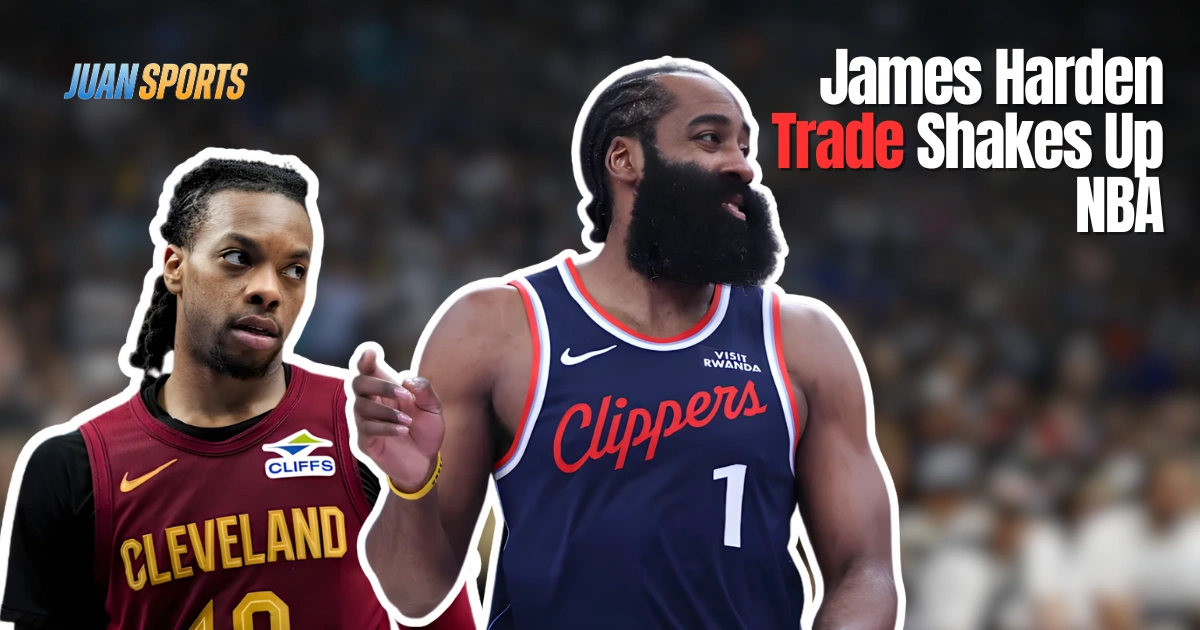
In a stunning mid-season move, the Harden trade was finalized on February 3, 2026, as the LA Clippers sent 11-time All-Star James Harden to the Cleveland Cavaliers. This deal, completed just two days before the league’s trade deadline, marks the fifth time Harden has been traded in his career and signals a major strategic shift for both franchises. Fans across the league were stunned, as Harden has long been a marquee figure in the NBA, known for his scoring, passing, and signature step-back three-pointers.
In return, the Clippers received 26-year-old guard Darius Garland and a 2026 second-round draft pick, making the trade one of the most discussed moves of the season. Analysts immediately began debating the long-term implications for both franchises, particularly how it reshapes the Eastern Conference playoff race. Juan Sports has been tracking every development of the trade, highlighting its impact on team dynamics and player chemistry.
James Harden Trade Details at a Glance
Cleveland Cavaliers Receive: James Harden
LA Clippers Receive: Darius Garland and a 2026 second-round pick
The Harden trade instantly transforms Cleveland’s roster. By adding Harden, the Cavaliers pair two All-Stars—Harden and Donovan Mitchell—forming one of the league’s most potent backcourts. This move is widely seen as Cleveland’s “win-now” gambit, aiming to capitalize on a talented roster in the prime of their careers.
The “Win-Now” Gamble for Cleveland
Cleveland’s front office views the Harden trade as a bold push for immediate success. At 36 years old, Harden is performing at an elite level, averaging 25.4 points, 8.1 assists, and 4.8 rebounds per game through 44 games this season. He ranks fourth in the league in assists per game and remains one of the NBA’s most dynamic offensive players.
Pairing Harden with Donovan Mitchell creates a backcourt capable of explosive scoring and high basketball IQ. Analysts suggest that the Harden trade could be the key to elevating Cleveland’s playoff ceiling, even though it breaks up the previous “Core Four” of Garland, Mitchell, Evan Mobley, and Jarrett Allen.
Cleveland’s coach and management have indicated that integrating Harden into the team’s schemes is their top priority. The Harden trade not only brings scoring firepower but also veteran leadership, which could be crucial for guiding a team with high expectations deep into the playoffs.
The Cavaliers’ management has also emphasized that they are ready to adjust rotations and defensive schemes to maximize Harden’s impact. With this trade, Cleveland hopes to improve its standings and potentially make a deep run in the Eastern Conference, relying on Harden’s experience and versatility in high-pressure playoff situations.
Financial Impact of the Harden Trade
Financial strategy played a major role in trade. Harden is earning $39.3 million this season and has a player option for $49.2 million in 2026–27. If he opts out, Cleveland could free up significant cap space sooner than they would have with Garland, who has over $42 million per season remaining on his contract.
The move balances Cleveland’s immediate championship ambitions with long-term financial flexibility. The Cavaliers’ front office believes the Harden trade provides them both the on-court talent to compete immediately and the financial leeway to make further adjustments if necessary.
The Clippers Move Toward the Future
For the LA Clippers, the Harden trade signals a clear shift from a veteran-heavy roster to one focused on youth and long-term sustainability. Despite a strong 17–5 surge late in the season, the Clippers struggled to overcome a disastrous 6–21 start and currently sit 9th in the Western Conference.
The acquisition of Darius Garland offers the Clippers a younger, two-time All-Star to build around alongside Kawhi Leonard. Garland has averaged 18.0 points and 6.9 assists in 26 games, though he has been sidelined since January due to a right big toe sprain. Analysts agree that the trade represents both a risk and an opportunity, as the Clippers pivot toward a more sustainable roster model built around younger talent. Juan Sports notes that fans are eagerly watching how Garland will mesh with the team once healthy.
The Clippers’ leadership believes Harden provides them the opportunity to reset their long-term plans, create salary flexibility, and gradually develop a younger core that can contend for championships over the next several years.
Strategic Implications
The Harden trade creates fascinating scenarios for both Cleveland and Los Angeles:
- Cleveland: Harden and Mitchell now share ball-handling responsibilities. Analysts suggest Harden’s size and defensive versatility may allow the Cavaliers to hide him defensively more effectively than the previous Garland-Mitchell pairing. The trade adds another layer to Cleveland’s offense, as Harden’s ability to draw defensive attention opens opportunities for teammates.
- LA Clippers: Once healthy, Garland offers traditional playmaking skills and youth, potentially extending the competitive window for a Clippers roster previously considered the oldest in the NBA. The trade also demonstrates the Clippers’ willingness to embrace change and take calculated risks to improve their long-term prospects.
Harden waived a one-year Bird restriction to facilitate the Harden trade, reportedly motivated by the desire for a longer-term contract extension that the Clippers were unwilling to provide.
Playoff Implications
With the Harden trade, Cleveland boasts one of the league’s most explosive backcourts. Harden’s ability to create shots and involve teammates gives the Cavaliers a new dimension, potentially transforming them from a good team to a championship contender.
Meanwhile, the Clippers will need Garland and Leonard to step up and provide leadership, scoring, and consistency. The Harden trade forces both teams to rethink rotations, offensive schemes, and defensive assignments, making the remainder of the season particularly intriguing for fans and analysts alike.
Analysts suggest the trade could reshape the Eastern Conference playoff landscape, creating new rivalries and intensifying competition among the top-seeded teams.
Fans React
The Harden trade has sparked widespread debate across social media and sports talk shows. Fans praised Harden’s scoring ability and veteran presence, while some questioned whether Cleveland disrupted team chemistry too much. Analysts noted that the trade was a calculated gamble: if Harden and Mitchell find chemistry quickly, the Cavaliers could emerge as a dominant Eastern Conference force.
Sports journalists have highlighted that the trade may also influence future player movement trends, demonstrating how teams are willing to trade youth for established talent in pursuit of immediate success.
Looking Ahead
The Harden trade represents more than just a player movement—it reflects a philosophical shift for both franchises. Cleveland embraces immediate contention, while the Clippers embrace youth, flexibility, and a potentially longer-term window of competitiveness.
Harden joins his sixth NBA team, hoping the Harden trade will finally deliver the championship glory that has eluded him throughout his career. Both franchises now face high expectations as they adapt to new rosters, with the trade at the center of every discussion leading into the playoffs.
Juan Sports will continue to provide updates and analysis on the Harden trade, keeping fans informed about its ripple effects across the league. This trade not only changes team dynamics but also reshapes the narrative of the NBA season.
Browse other News.

Leave a Reply